
The Origins of Tarot: From Renaissance Cards to Modern Reflection
Learn where tarot really came from, how it evolved beyond a Renaissance card game, and why it became a tool for reflection. See how Orelune continues that tradition with AI-assisted insight.
Tarot did not begin as fortune telling. It began as a card game, and only over time did its imagery become a language for reflection, meaning, and inner interpretation.
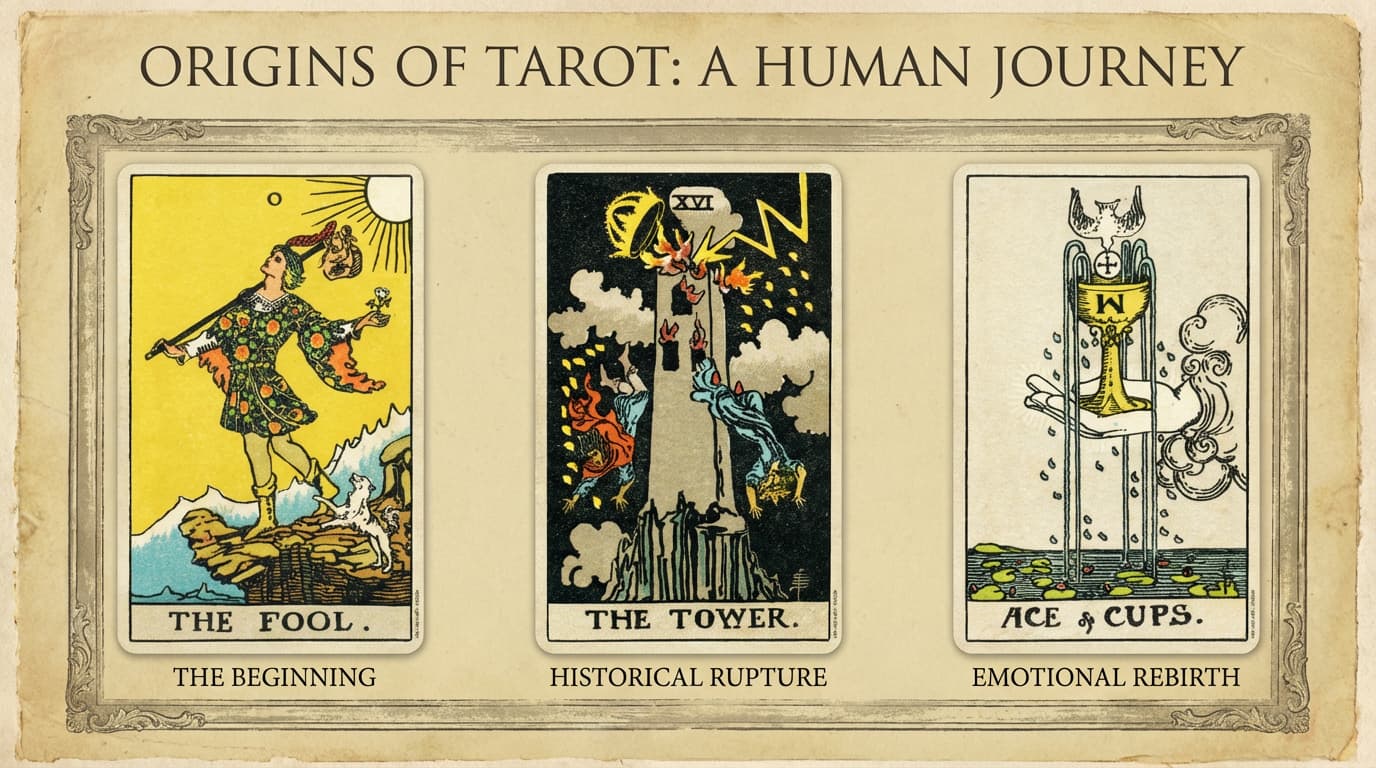
People often meet tarot through mystery, symbolism, or spiritual language, so it is easy to assume that tarot started as an occult system. Historically, that is not the case. Its roots are social, cultural, and deeply human.
Knowing that history helps explain why tarot still resonates now.
Tarot began as a game
The earliest tarot decks appeared in fifteenth-century Europe, especially in Renaissance Italy. These decks were used by wealthy families in a game called tarocchi.
From the beginning, the deck had a recognizable structure:
The first part was fifty six suit cards, which later became associated with the Minor Arcana and also connect to the ancestry of modern playing cards.
The second part was twenty two illustrated trump cards. These images included figures such as The Fool, Death, Fortune, and Justice. Today we know them as the Major Arcana.
At that stage, these cards were not mystical tools. Their imagery reflected the moral, religious, and social imagination of the world around them. Tarot was not created to forecast the future. It represented the world as people understood it.
Why the symbols endured
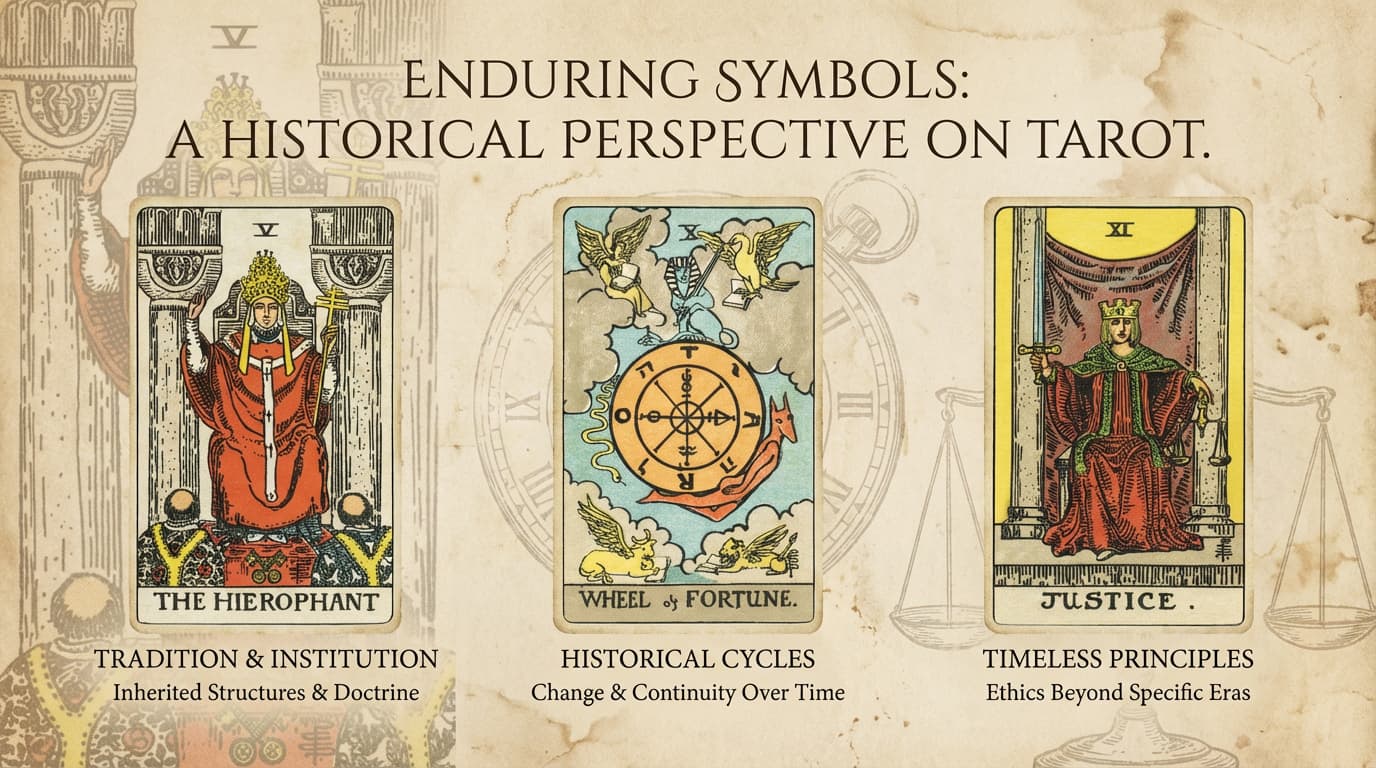
Even though tarot began in play, the pictures were unusually durable. They survived because they carried symbolic flexibility.
As Europe changed through religious upheaval, scientific progress, and political transformation, older explanatory systems began to weaken. Tarot remained useful because it was not locked into one rigid doctrine. The cards presented images that people could reinterpret again and again.
That openness is one reason tarot outlasted many more fixed systems of meaning.
The esoteric turning point
In the eighteenth and nineteenth centuries, tarot took on a new life.
Mystics, philosophers, and occult scholars began reading the cards through Hermetic thought, astrology, Kabbalah, and alchemy. Some of them claimed tarot preserved lost ancient wisdom. Those historical claims were mostly incorrect, but they still transformed the way tarot was used.
The Major Arcana, in particular, began to be seen as a symbolic map of human experience. The Fool became the beginning of a journey. Death came to signify transformation rather than literal death. The Tower came to represent collapse and revelation. The Star suggested healing and renewed hope.
Tarot moved away from external event prediction and toward inner interpretation.
Tarot as reflective practice
That reflective function is one reason tarot remains relevant today.
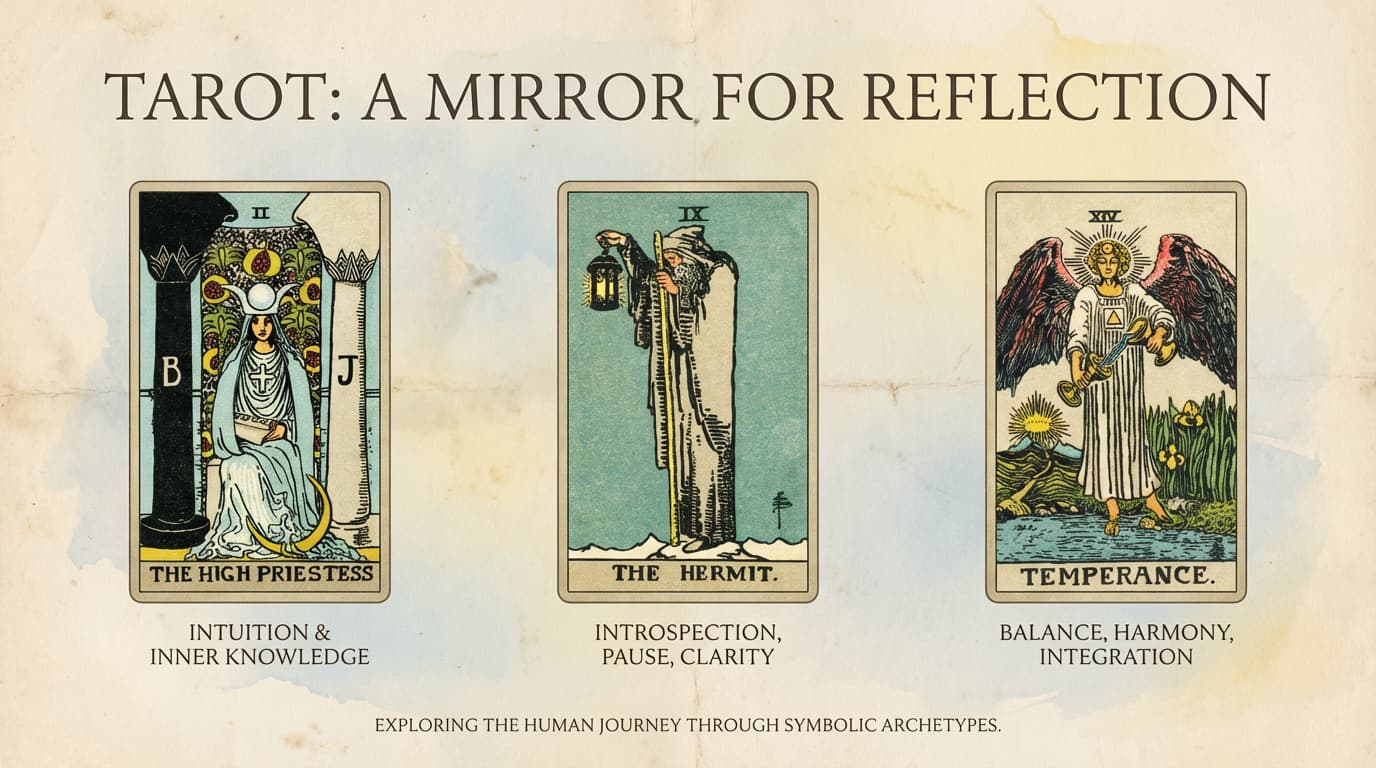
Modern readers often turn to tarot not because they expect a fixed answer, but because the cards help them think, feel, and notice differently. A reading can bring perspective to relationships, emotions, uncertainty, and decisions.
Tarot does not compete with logic. Instead, it works alongside it in the places where logic alone can feel incomplete, especially when meaning, intuition, or ambiguity are involved.
In that sense, tarot does not tell you exactly what will happen. It helps you recognize what you are already living through.
Tarot in the digital era
As more of life moved online, tarot naturally moved with it.
Digital tarot lets people draw privately, quickly, and on their own terms. The ritual changes form, but the symbolic encounter remains. Technology does not automatically remove the soul of tarot. When it is used thoughtfully, it can translate old symbols into a modern context.
Artificial intelligence adds another layer to that evolution. Used carefully, it does not have to replace intuition. It can support interpretation by surfacing patterns, emotional themes, and connections that help the reading feel more coherent and relevant.
This is simply another chapter in tarot's long history of adaptation.
Where Orelune fits
Orelune is built within that modern chapter.
Instead of emphasizing fortune telling or rigid meanings, Orelune approaches tarot as a reflective space. The goal is not to hand down absolute answers, but to guide users into a clearer conversation with the cards and with themselves.
By combining traditional tarot symbolism with AI-assisted interpretation, Orelune offers readings that aim to be personal, layered, and open-ended. The AI is not framed as the final authority on meaning. It is there to help surface patterns, questions, and possibilities for reflection.
There is no signup required to begin. Users can draw cards freely, pause, and consider what the reading may be showing them. The emphasis stays on insight and awareness rather than prediction.
From Renaissance tables to digital rituals, tarot has always evolved alongside the people using it. Orelune belongs to that ongoing evolution.
#Tarot#Tarot Explained#Spirituality#Self Reflection#Symbolism#Tarot History
[
Orelune
Orelune is an AI-powered tarot experience with daily tarot, one-card & three-card spreads, and intuitive guidance for love, emotions, and life direction.
](/blog?author=orelune)
More Posts

Orelune Tarot Series: The Tower - Upheaval, Revelation & Radical Change
Discover The Tower tarot card meaning on Orelune, including sudden change, truth, love, career, symbolism, and yes or no interpretation.


Orelune Tarot Series: The Empress - Nurturing, Abundance & Creative Bloom
Explore The Empress tarot card on Orelune, including love, abundance, career, money, symbolism, yes/no guidance, and practical reading support.

Orelune Tarot Series: The Hanged Man - Pause, Perspective & Conscious Surrender
Discover The Hanged Man tarot card on Orelune, including surrender, perspective, love, career, money, symbolism, yes/no guidance, and practical reading support.
Newsletter
Join the community
Subscribe to our newsletter for the latest news and updates