Logo
  • 首页
  • 心灵日志
  • 定价
Best Tarot and AI Tarot Reading Tools in 2026
2026/04/09

Best Tarot and AI Tarot Reading Tools in 2026

Discover the best AI tarot reading tools and online tarot reading platforms in 2026. This hands-on comparison shows how different tarot apps perform in real use, including Orelune.ai.

A practical comparison of popular tarot tools, from traditional sites to newer AI-based experiences. Based on real use, this guide looks at how different tools handle your questions, deliver interpretations, and shape the overall reading experience.

Best Tarot and AI Tarot Reading Tools in 2026

A grounded comparison from actual use

Over time I've tried quite a few tarot tools, both traditional and newer AI-based ones. What became clear pretty quickly is that most of them are not really competing in the same category.

What became clear quickly is that these tools don't all serve the same purpose.

This comparison is based on actually using these tools, not just looking at features. The goal is simple. If you are choosing a tarot tool, this should help you understand what each one really feels like to use.


How I'm looking at these tools

When using tarot regularly, a few things start to matter more than anything else.

First is whether the tool feels like it understands your question or just gives you generic meanings.

Second is how the reading is delivered. Some feel like flipping through a reference book. Others feel closer to a conversation.

Third is whether the experience has any sense of ritual or atmosphere, even in a digital format.

With that in mind, here's how these tools compare.


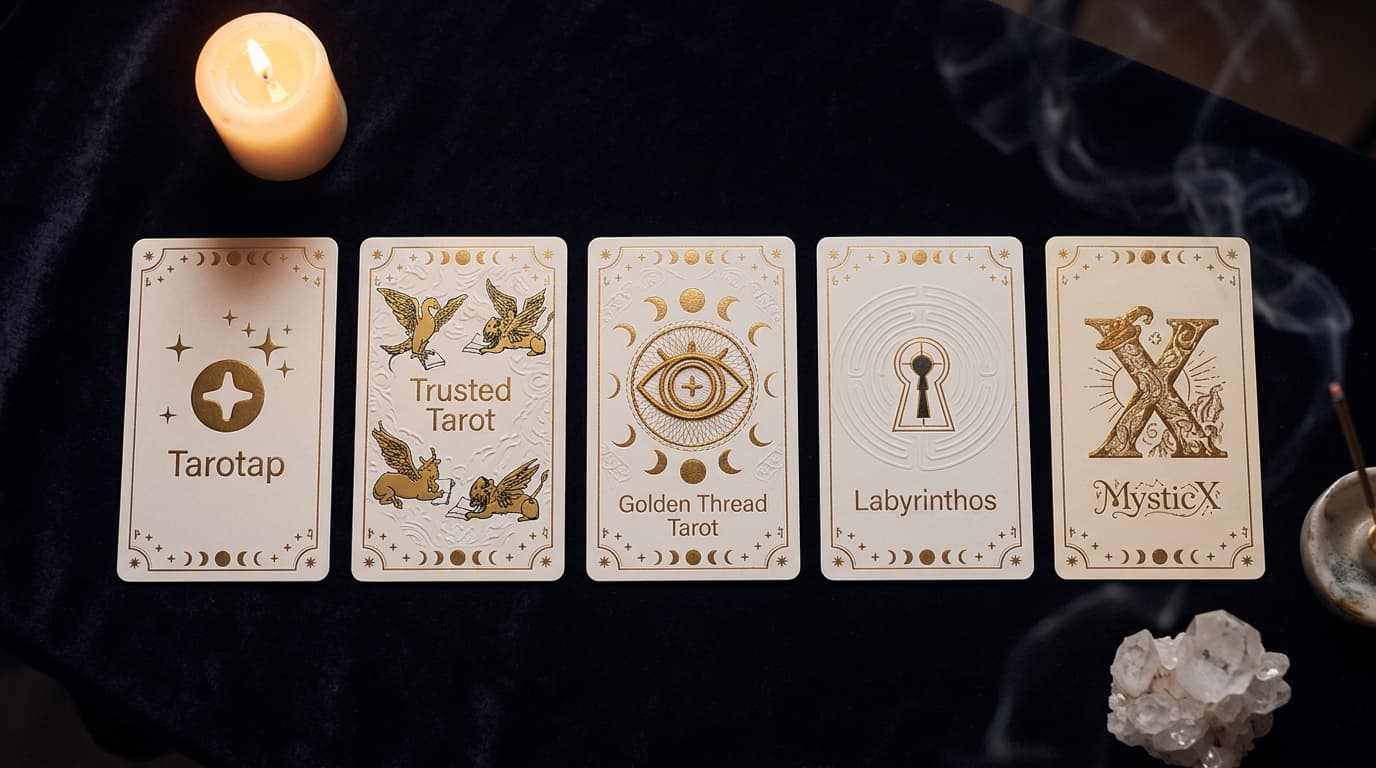
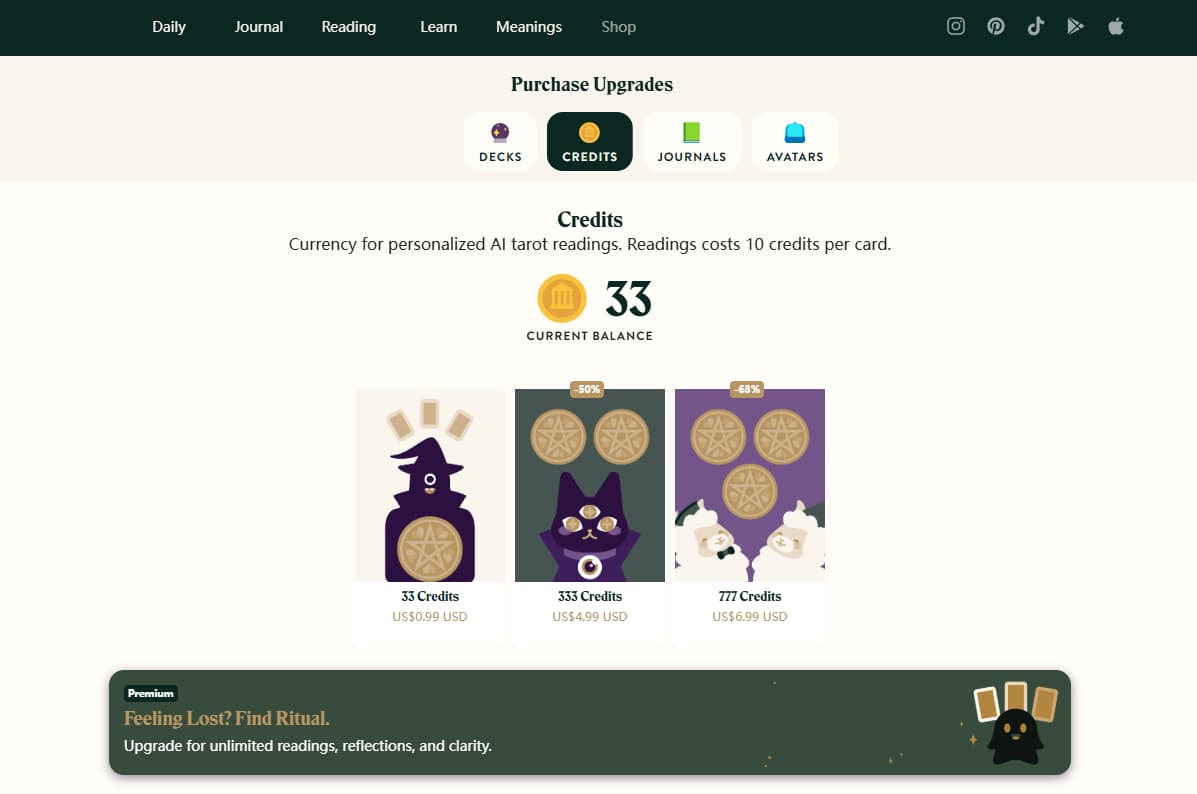
Tarotap https://tarotap.com/en

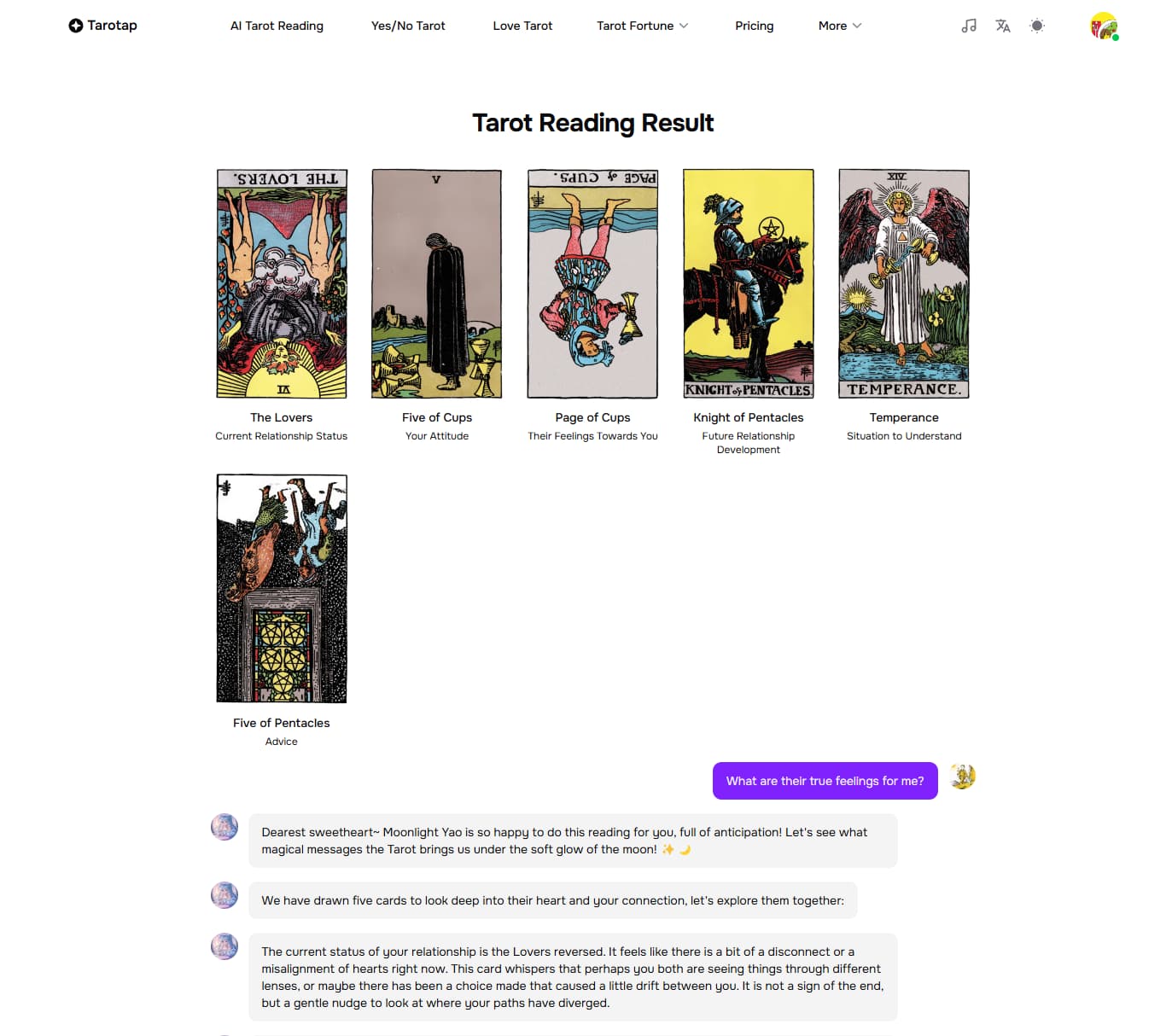
Tarotap is one of the more straightforward AI tarot tools. You ask a question, draw cards, and it generates an interpretation almost instantly.

1.00

What works well is the speed and accessibility. You don't need any tarot background, and the flow is simple enough that you can get a reading in seconds. It's the kind of tool you open when you want a quick check-in rather than a deep session.

After using it a few times, the limitation becomes more noticeable. The interpretations tend to stay on a general level. They are not wrong, but they often don't go very far into the nuance of the situation you are asking about.

It works best when you treat it as a light, fast tarot experience rather than something reflective.


Trusted Tarot https://www.trustedtarot.com

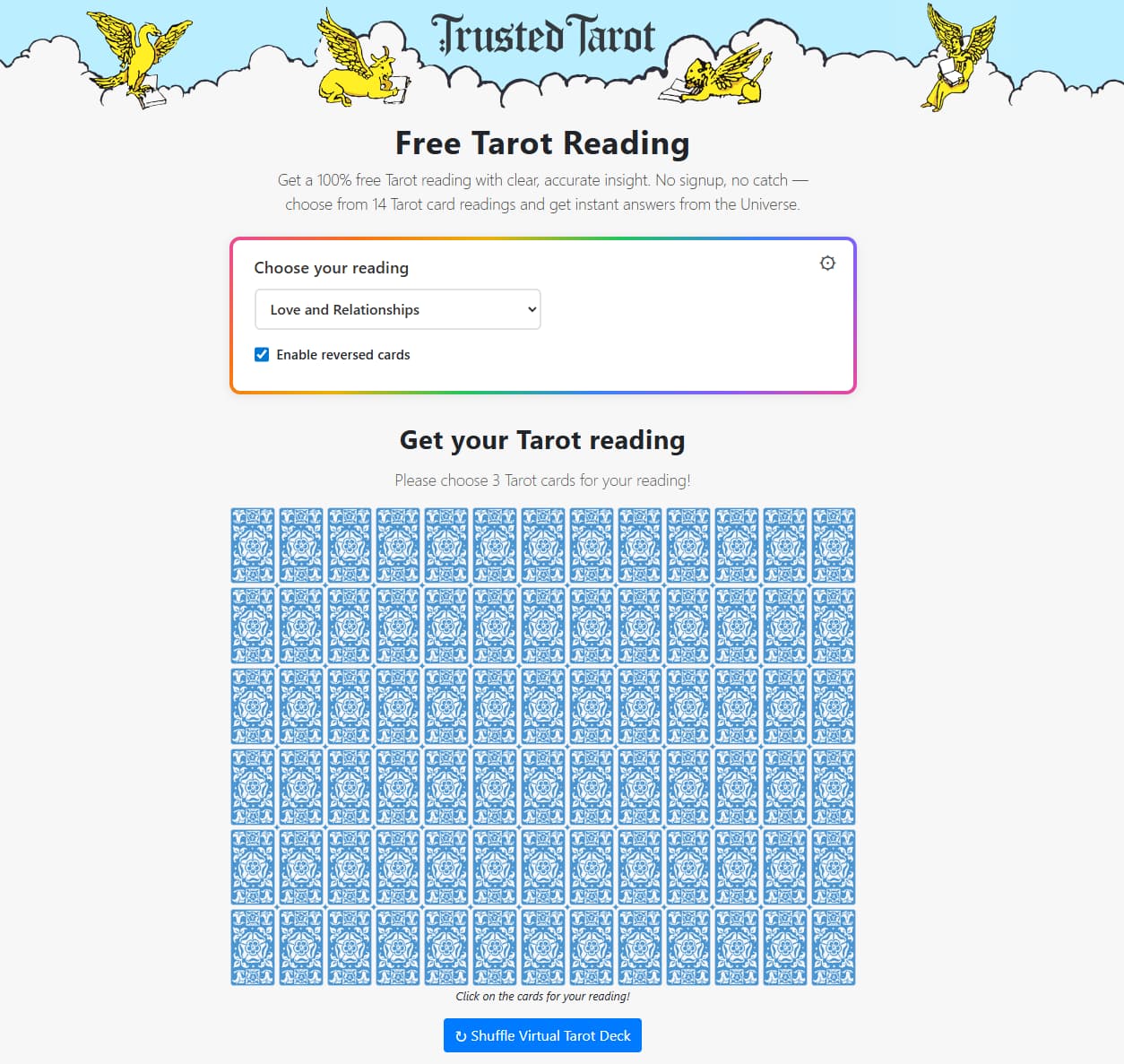
Trusted Tarot feels very close to the older generation of online tarot sites. You choose a spread, draw cards, and read predefined interpretations.

1.00

There is something reliable about it. The meanings are consistent, and if you already have some tarot knowledge, you can layer your own interpretation on top. It does not try to guide you too much, which some people prefer.

At the same time, it does not adapt to your question. The reading is the same no matter what context you bring into it. So the experience depends heavily on how much interpretation you are willing to do yourself.

I found it most useful when I wanted a neutral reference rather than guidance.


Golden Thread Tarot https://goldenthreadtarot.com

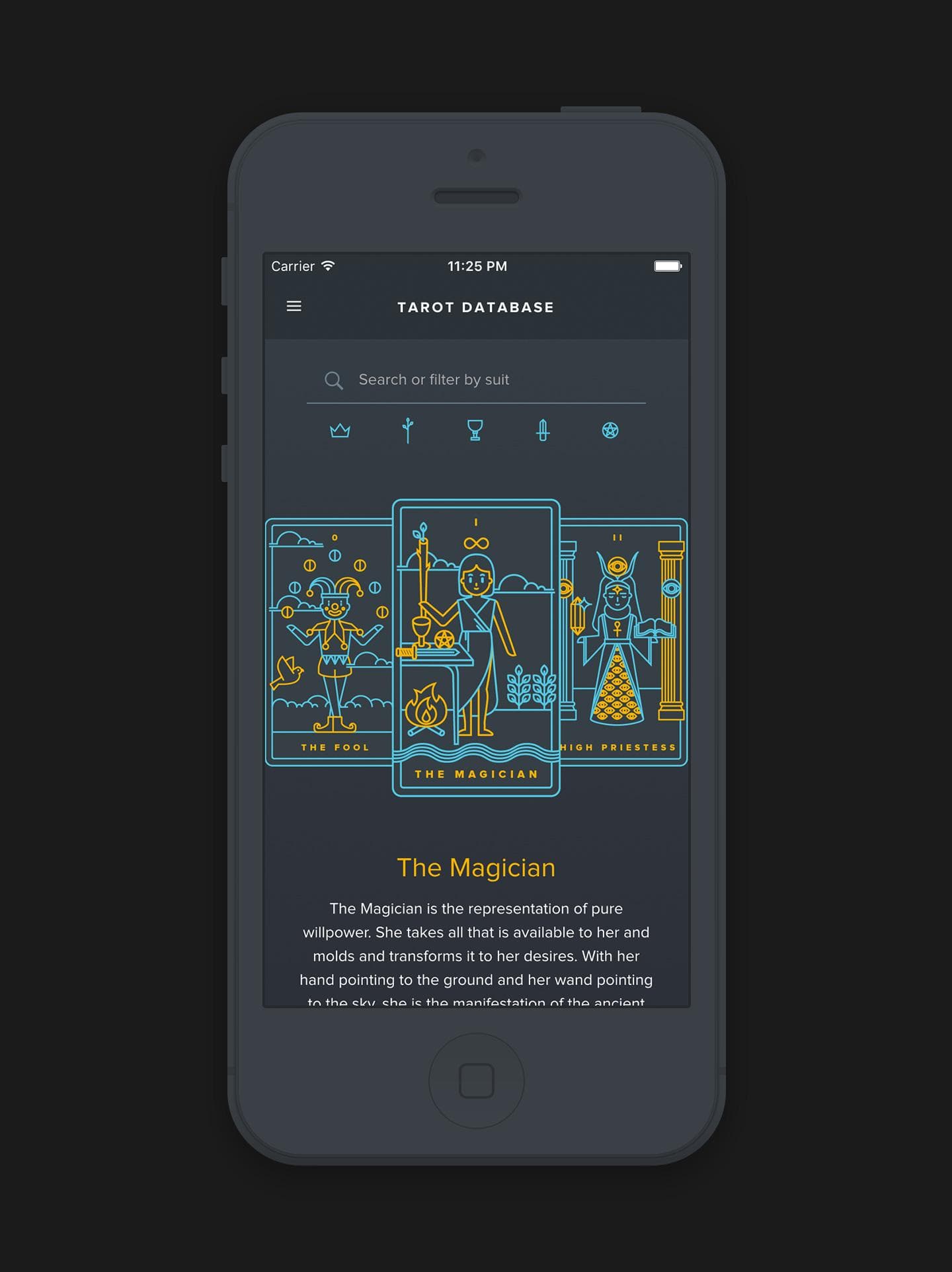
Golden Thread Tarot feels more like a designed experience than a simple tool. The visuals are clean, the card system is well structured, and the app encourages you to build familiarity with tarot over time.

1.00

What stands out is how it supports learning. You are not just pulling cards, you are gradually understanding them. For someone who wants to develop intuition or study tarot more seriously, this is a strong environment.

The trade-off is that it is not built for quick answers. If you are in a moment where you want immediate clarity, the experience can feel a bit slow or indirect.

It's closer to a long-term companion than a quick reading tool.

Golden Thread Tarot is part of the broader Labyrinthos ecosystem, which expanded the original deck into a more comprehensive tarot learning platform.


Labyrinthos https://labyrinthos.co

Labyrinthos goes even deeper into the learning side of tarot. It includes lessons, card meanings, and interactive ways to understand the system as a whole.

1.00 1.00

Using it feels less like doing a reading and more like entering a structured tarot space. You can explore spreads, meanings, and symbolism in a more intentional way.

This makes it valuable if your goal is to really understand tarot, not just use it occasionally. But for everyday questions or emotional guidance, it can feel a bit distant.

I found myself using it more when I was in a learning mindset rather than when I had a specific question.

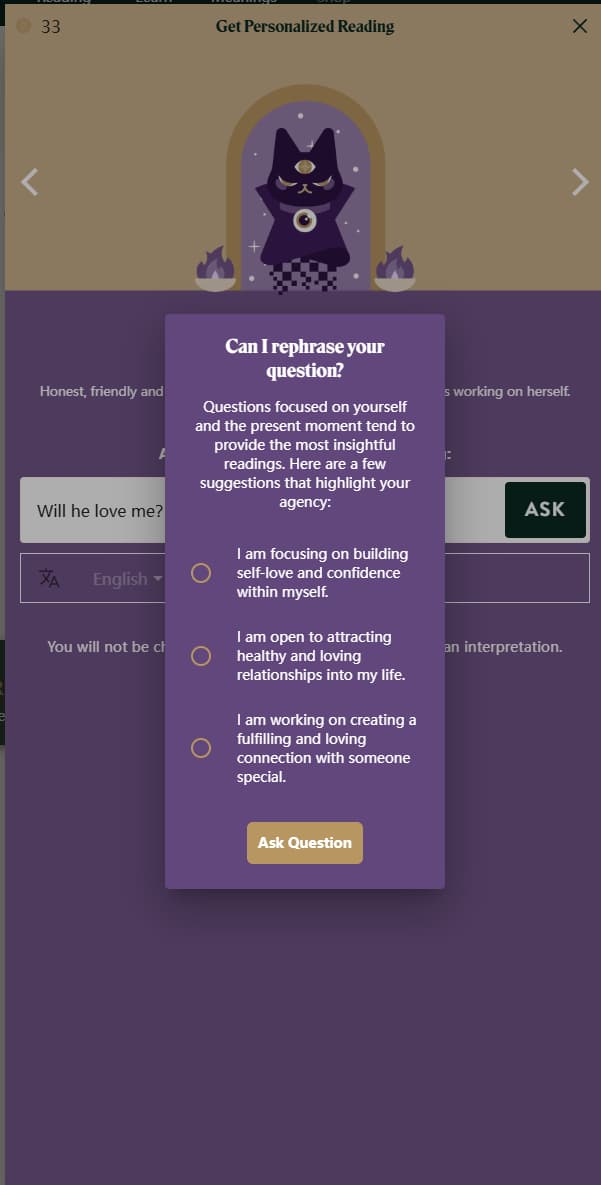
Instead of directly answering the user's question, the system often reframes it into a more self-focused prompt, shifting the reading away from prediction and toward personal reflection.


A subtle but important difference

One subtle difference that stood out across these tools is how they handle your original question.

Some systems don't directly answer what you ask. Instead, they reframe your question into something more self-focused, shifting the reading away from prediction and toward reflection.

This can feel helpful in some contexts, but it also means the reading is no longer responding to your exact question.

Other tools stay closer to what you actually asked, allowing the interpretation to unfold from that starting point.

This difference may seem small, but it changes how personal and relevant a reading feels.


The three types of tarot tools today

After using these tools over time, they tend to fall into three broad categories.

Some are built around traditional tarot structures. These focus on spreads and fixed interpretations, leaving most of the meaning-making to the user.

Others are designed as learning systems. They help you understand the cards, symbolism, and relationships between meanings, but are less focused on answering specific questions.

And then there is a newer category of AI-based tools. These aim to interpret the cards for you, sometimes quickly, sometimes more deeply depending on how the system is designed.

What's interesting is that most tools sit clearly in one of these categories, and very few try to bridge between them.


How they actually differ in practice

After spending time with all of these, the difference is less about features and more about intention.

If you want something familiar and structured, Trusted Tarot fits that role.

If you want to learn tarot properly, Golden Thread and Labyrinthos are much stronger.

If you want something quick and easy, Tarotap works well enough.

But none of these fully bridge the gap between interpretation and experience. Most either give you meanings or help you learn them.


Orelune https://orelune.co/

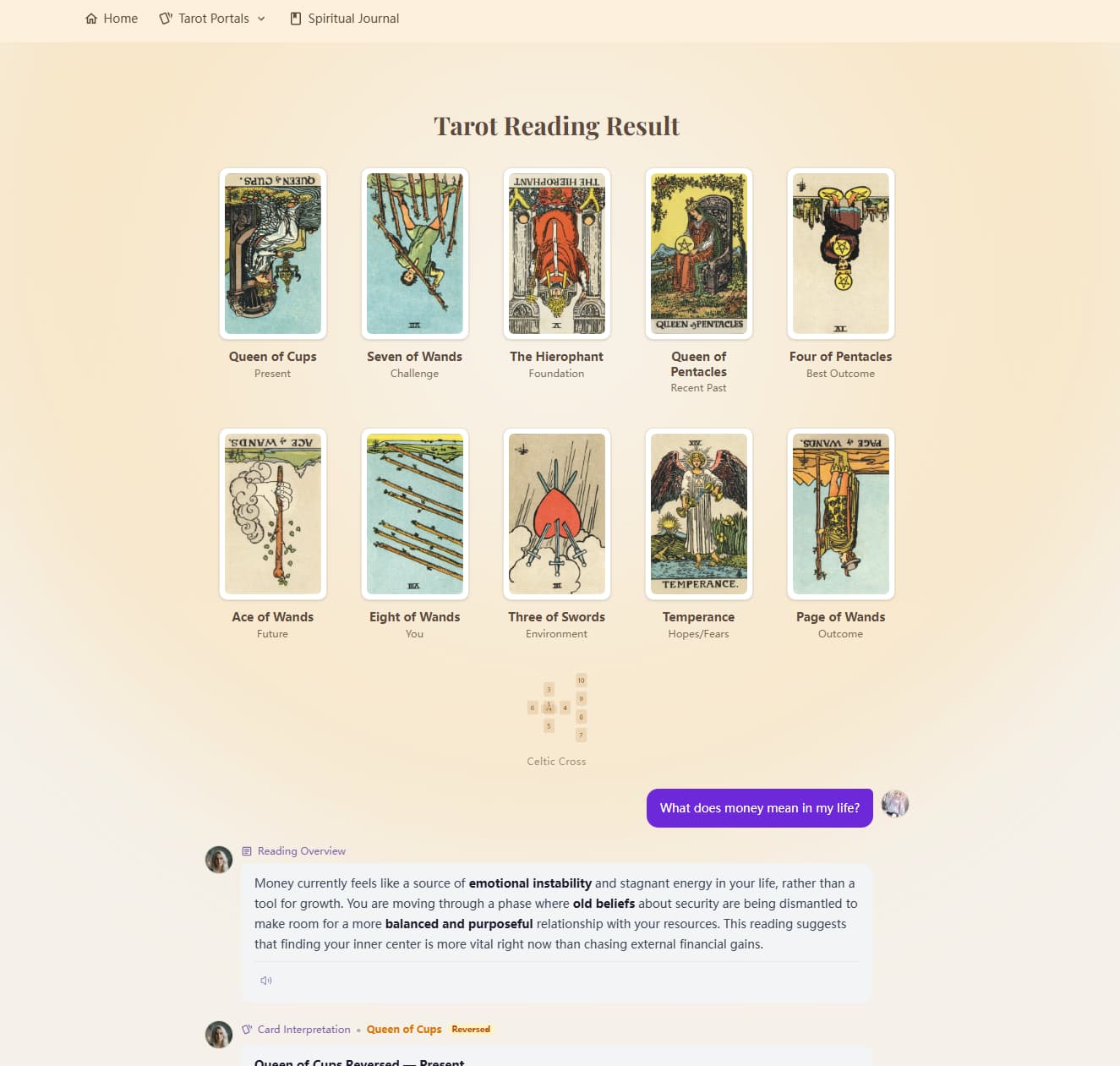
Orelune.ai sits in a slightly different place compared to the tools above. After trying it alongside more traditional apps and sites, the biggest difference is not just the use of AI, but how the reading itself is structured.

1.00

Instead of reducing the experience to either fixed meanings or quick summaries, it treats a reading more like a process. There is a clear sense of progression from the question, to the cards, and then into a layered interpretation. The output is not just a block of text, but something that feels more guided and intentional.

One thing that stood out is that it does not try to rewrite your question. If you ask something direct, it stays with that context rather than shifting it into a safer or more generalized version. That makes the experience feel more aligned with what you actually came to ask.

Compared to tools that focus on learning or static meanings, this feels closer to a narrative reading. Compared to faster AI tools, it is less about speed and more about depth and tone.

It may not appeal to someone looking for a quick keyword-style answer. But if you are looking for something that feels closer to sitting with a reading rather than just getting one, it offers a noticeably different experience.

1.00

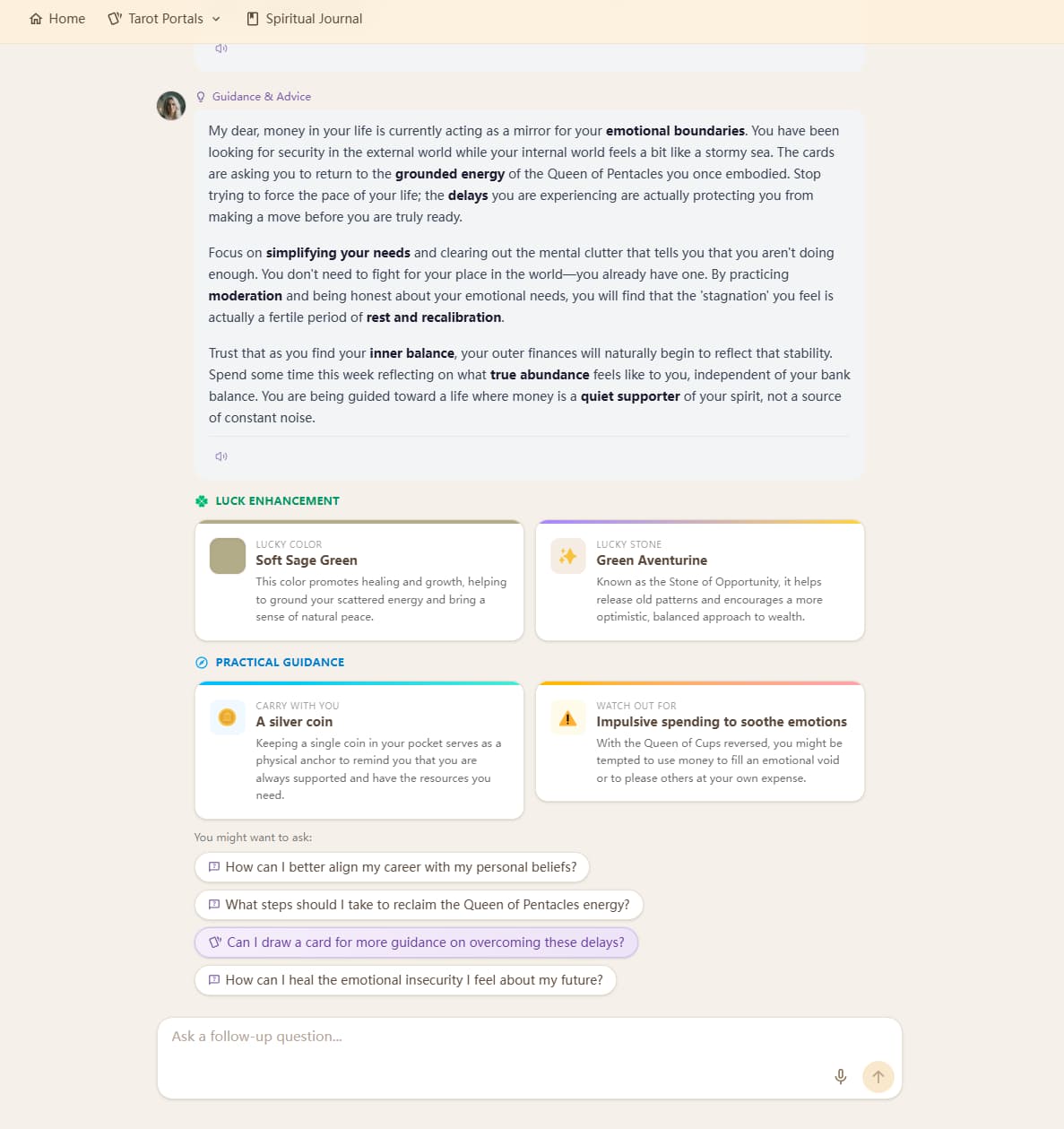
Another difference that becomes more noticeable after using it for a while is how the experience doesn't end with a single reading.

In most tarot tools, once the interpretation is generated, that's essentially the end of the interaction. You either accept it or start over with a new spread. Here, the reading feels more like an ongoing thread rather than a one-time result.

You can ask follow-up questions directly within the same context, without losing the original interpretation. Instead of starting from scratch, the system builds on what has already been revealed, which makes the experience feel more continuous and grounded.

It also allows you to draw additional cards as part of that follow-up process. Rather than doing a completely separate reading, these extra cards act as extensions of the original spread, helping you go deeper into a specific part of the question.

This makes a subtle but important difference. Instead of ending with a single answer, the reading can evolve as you continue exploring the question.

Because of this, the system doesn't treat each interaction as isolated. The context of your previous reading carries forward, which makes follow-up questions and additional cards feel like part of the same session rather than separate attempts.


Other similar tools worth knowing

Galaxy Tarot: A more traditional tarot app that focuses on card meanings and simple spreads

Oranum: A live psychic platform where readings are done by real people rather than AI

Horoscope.com: Mainly focused on astrology content rather than tarot

Co Star: An astrology app built around natal charts and personality insights


Final thoughts

The biggest shift happening right now is not which tarot tool is best, but how different they are becoming.

What's changing is not just the tools themselves, but the kind of experience they are trying to create.

From experience, the right choice depends less on features and more on what you expect from a reading. Whether you want structure, knowledge, or something that feels more like guidance.

That difference is what actually shapes the experience.

If you're just starting out, a traditional or learning-based tool may feel more approachable.

If you already understand tarot and want to apply it to real questions, tools that interpret the cards for you can be more practical.

And if you're looking for something that feels less like a one-time reading and more like an ongoing conversation, the newer AI-driven experiences are starting to move in that direction.

#Tarot Guidance#Tarot For Beginners#Tarot Reading#User Guide#Symbolism#Spirituality#Self Reflection#Tarot

[Orelune
Orelune

Orelune is an AI-powered tarot experience with daily tarot, one-card & three-card spreads, and intuitive guidance for love, emotions, and life direction.

](/blog?author=orelune)


Source: https://orelune.co/blog/best-tarot-and-ai-tarot-reading-tools-in-2026

全部文章

作者

avatar for Orelune
Orelune

分类

  • 使用指南
A grounded comparison from actual useHow I'm looking at these toolsTarotap https://tarotap.com/enTrusted Tarot https://www.trustedtarot.comGolden Thread Tarot https://goldenthreadtarot.comLabyrinthos https://labyrinthos.coA subtle but important differenceThe three types of tarot tools todayHow they actually differ in practiceOrelune https://orelune.co/Other similar tools worth knowingFinal thoughts

更多文章

Orelune Tarot Series: King of Wands - Leadership, Vision & Authority
塔罗解析

Orelune Tarot Series: King of Wands - Leadership, Vision & Authority

Discover King of Wands tarot meaning on Orelune, including leadership, vision, love insights, career strategy, symbolism, yes/no guidance, and free tarot reading interpretation.

avatar for Orelune
Orelune
2026/04/10
Orelune Tarot Series: The Star - Hope, Inspiration & Renewal
塔罗解析

Orelune Tarot Series: The Star - Hope, Inspiration & Renewal

Discover The Star tarot card meaning on Orelune, including hope, inspiration, love, career insights, symbolism, yes/no guidance, and free tarot reading support.

avatar for Orelune
Orelune
2026/03/27
Orelune Tarot Series: The Magician — Manifestation, Power & Action
塔罗解析

Orelune Tarot Series: The Magician — Manifestation, Power & Action

Explore The Magician tarot card meaning on Orelune, including love, career, yes/no insights, symbolism, and practical reading interpretations.

avatar for Orelune
Orelune
2026/03/24

邮件列表

加入我们的社区

订阅邮件列表,及时获取最新消息和更新

LogoOrelune

??? Reddit ???????????????????????????

产品

  • 功能
  • 价格
  • 常见问题

资源

  • 博客
  • 文档
  • 更新日志
  • 路线图

公司

  • 关于我们
  • 联系我们
  • 邮件列表
© 2026 Orelune All Rights Reserved.support@orelune.com
定价服务条款隐私政策